
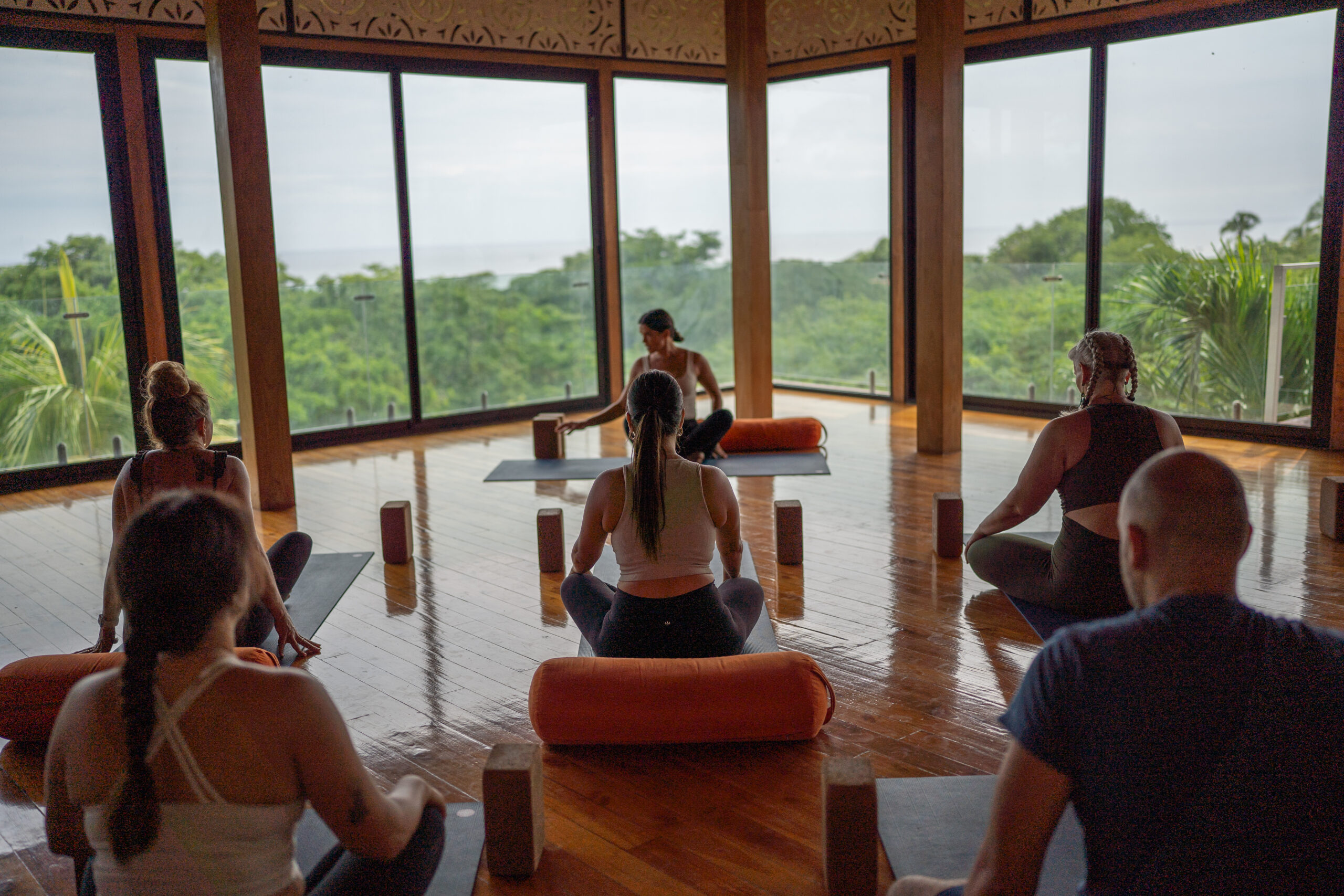
There is a moment, often on the first morning, when it becomes clear that this experience is different. The air feels heavier with humidity, the jungle hums before sunrise, and the shala opens to nature rather than walls. Joining our 200-hour yoga teacher training in Nosara means stepping out of daily routines and into a space designed for immersion, reflection, and presence.
Here, yoga is not something you fit between meetings or obligations. It becomes the structure of your days. Practice, study, rest, and conversation begin to weave together, creating a rhythm that feels both grounding and expansive. This training is less about escaping life and more about fully inhabiting it, with awareness.
Nosara’s environment invites a kind of attention that is hard to replicate elsewhere. Ocean air, open skies, and jungle paths quietly support the inner work of learning, often without words.
Why Nosara Is a Powerful Place for Yoga Teacher Training
Nosara moves at a pace shaped by nature. Days are influenced by tides, daylight, and weather rather than clocks. This rhythm gently retrains the nervous system, helping students slow down enough to absorb what they are learning.
The jungle and the ocean are not distractions from the training; they are part of it. Learning happens not only in lectures, but through lived experience.
Nosara also holds a strong, community-driven wellness culture that supports immersion and connection.
An Immersive 3-Week Experience at Bodhi Tree Yoga Resort
The training unfolds within the living rhythm of Bodhi Tree Yoga Resort, where practice, study, rest, and daily life happen in the same natural environment. There is no transition between “class time” and “real life” here; the training becomes the structure that holds the entire day.
Open-air shalas surrounded by jungle sounds, shared meals, and quiet moments between sessions create a container that supports both discipline and reflection. The international group dynamic adds depth to the experience, offering diverse perspectives while fostering a strong sense of collective growth.
A Typical Day in the 200-Hour YTT Program
Mornings begin early, with movement and breath setting the tone for the day. Practice is followed by study sessions that move between anatomy, philosophy, and practical inquiry, allowing ideas to be felt in the body rather than held only at an intellectual level.
Afternoons shift toward integration. Teaching labs, peer practice, and guided feedback invite students to experiment, make mistakes, and refine their voice as teachers. Evening sessions will generally consist of meditation, yogic philosophy lectures or non-contact hour assignments..
Throughout the day, the rhythm balances discipline with integration. Effort is met with pause, and learning unfolds not through intensity alone, but through sustained attention over time.
What You Learn Beyond the Yoga Poses
This training goes far beyond learning shapes or memorizing sequences. The curriculum is designed to help students understand why practices work, how to adapt them, and when to apply them with care and awareness.
Alignment, Modifications, and Intelligent Sequencing
Alignment is approached as a tool for clarity and safety rather than rigidity. Drawing from Hatha-informed foundations and a Vinyasa-based approach, students learn how to build sequences that are coherent, adaptable, and responsive to different bodies.
Emphasis is placed on modifications, hands-on awareness, and learning to read what is happening in front of you rather than relying on fixed formulas.
Anatomy, Breath, and Nervous System Awareness
Anatomy is taught in a practical, embodied way, focusing on mobility, functional movement, and breath mechanics. Instead of memorizing muscle groups in isolation, students explore how breath, posture, and nervous system regulation interact during practice.
This understanding supports safer teaching, greater self-awareness, and a more nuanced relationship with effort and rest.
Philosophy and the Inner Work of Yoga
Yoga philosophy is woven into daily practice rather than presented as abstract theory. Through the Eight Limbs, the Yoga Sutras, somatic inquiry, and chakra exploration, students are invited to reflect on how yoga operates as a lived discipline.
The emphasis is not on belief systems, but on inquiry: how attention, ethics, and awareness shape both teaching and daily life.
Learning to Teach from Experience, Not Memorization
Teaching is developed gradually, through consistent practicum rather than performance. From early in the training, students are invited to step into the role of teacher in a supportive environment where feedback is constructive and growth is encouraged.
Practice teaching sessions help build confidence over time. Instead of aiming for perfect cues, students learn to listen, observe, and respond to what is happening in the room. Mistakes are treated as part of the learning process, not something to avoid.
By the end of the training, teaching emerges from inner awareness rather than memorized scripts. The focus shifts toward presence, clarity, and the ability to guide others with authenticity and care.
The Role of Community and Shared Growth
Community plays a central role in the training experience. Small group projects and peer teaching sessions create spaces for collaboration, dialogue, and mutual support, allowing students to learn not only from teachers, but from one another.
Shared meals, informal conversations, and moments of reflection between sessions deepen this sense of connection. These everyday interactions often become as meaningful as the structured parts of the program, offering perspective, grounding, and a feeling of belonging.
Many students leave with relationships that extend well beyond the three weeks of training. The experience fosters a network rooted in shared effort, trust, and personal transformation, rather than fleeting social connection.
Meet the Teachers Behind the Training
Bridget Shae — Program Director
Bridget Shae leads the program with an inquiry-based approach that emphasizes awareness, discernment, and lived understanding over rigid methodology. Her teaching invites students to ask meaningful questions about their practice and their role as teachers, rather than seeking fixed answers.
With years of international teaching experience, Bridget brings a global perspective that integrates diverse lineages while remaining grounded in clarity and accessibility. Her guidance helps students develop both technical understanding and personal insight, supporting a teaching style that is adaptable, thoughtful, and rooted in presence.
Dakota Shae — Program Instructor
Dakota Shae supports the training with a strong focus on breathwork, functional anatomy, and practical application. His teaching helps bridge conceptual understanding with embodied experience, offering students clear tools they can immediately integrate into both practice and teaching.
Working from a whole-system wellness perspective, Dakota emphasizes how breath, movement, and nervous system regulation interact within the body. His approach encourages students to think beyond isolated techniques and toward sustainable, responsive teaching.
Throughout the training, Dakota’s steady presence provides ongoing support during practicum sessions, discussions, and integration phases, helping students refine their skills with confidence and care.
Who This Yoga Teacher Training Is For
This Yoga Teacher Training is designed for a wide range of students. It welcomes aspiring teachers who feel called to share yoga, as well as dedicated practitioners seeking a deeper understanding of their practice.
The program also supports those who do not plan to teach professionally but want a structured period of immersion, reflection, and personal growth. For many, the training becomes a way to reconnect with purpose, discipline, and embodied awareness.
There is no expectation to arrive as a “perfect yogi.” What matters most is curiosity, commitment, and a willingness to engage fully with the process.
Life Outside the Classroom
Time outside the classroom is considered an essential part of the learning process. Rest days allow students to step back from structured practice and integrate what has been explored physically, mentally, and emotionally.
Beach time, quiet moments by the pool, or restorative experiences at the spa offer space for reflection and recalibration. These pauses support nervous system regulation and help prevent the training from becoming purely effort-driven.
By honoring rest and integration alongside study and practice, the training encourages a sustainable relationship with learning, one that extends beyond the three weeks in Nosara.
Frequently Asked Questions
What style of yoga is taught in this training?
The program is rooted in Hatha-informed foundations with a Vinyasa-based approach. Emphasis is placed on intelligent sequencing, functional alignment, breath awareness, and adaptability rather than adherence to a single rigid style.
Do I need prior teaching experience?
No prior teaching experience is required. The training is designed to support both first-time teachers and students who are new to teaching but curious about the process.
Is this Yoga Alliance certified?
Yes. Upon successful completion, graduates receive a 200-hour Yoga Teacher Training certification that is eligible for Yoga Alliance registration.
What if I have physical limitations or injuries?
The training emphasizes modifications, accessibility, and self-awareness. Students are encouraged to work within their own capacity, and support is available to adapt practices as needed.
Are there days off during the training?
Yes. Rest days are built into the schedule to support integration, recovery, and reflection.
Will I be evaluated or tested?
Assessment is ongoing and experiential rather than exam-based. Feedback focuses on participation, growth, and integration instead of performance or memorization.
Can I join even if I don’t plan to teach yoga?
Absolutely. Many students participate for personal immersion, deepening their practice, or taking intentional time for growth and reflection.
What kind of support is available during the program?
Students receive guidance from experienced teachers, peer support within the group, and a learning environment designed to encourage questions, dialogue, and steady development throughout the training.
Learn More About Yoga Teacher Training in Nosara
https://bodhitreeyogaresort.com/bodhi-tree-yoga-teacher-training-in-partnership-with-ila-yoga/
Learn More About Yoga Teacher Training in Nosara
For those interested in exploring the structure, curriculum, and upcoming dates in more detail, you can find additional information about the program here:
Yoga Teacher Training in Nosara, Costa Rica